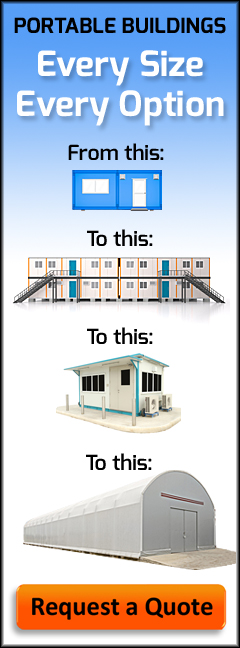

Think about turning any place into your own mobile office. Mobile offices offer this freedom, but the foundation choice can make or break your setup. Do you really need a concrete base, or can you opt for something lighter? Learn about the advantages of mobile offices, details about foundations, and important local rules, such as choosing a site and following building codes. Find out if a concrete foundation is necessary or just optional, and improve your work experience while mobile.
Definition of Mobile Office
A mobile office is a movable work area that lets people do business from almost any location, using technology integration to stay in touch and get work done.
Common examples include portable cabins, RVs, and prefabricated units, each providing unique benefits.
For instance, an RV offers mobility and self-sufficiency, equipped with workspace amenities for extended trips. On the other hand, portable cabins can be installed on-site, providing a stable environment with customizable layouts.
Improving these setups with high-speed mobile internet and cloud-based software guarantees smooth connectivity and teamwork, enhancing workspace design and productivity. Tools like Zoom for meetings and Trello for managing tasks can increase productivity, enabling remote work and teams to work together successfully from any place.
Benefits of Mobile Offices
Mobile offices provide many advantages, like increased output, less time spent traveling to work, and considerable savings on operational costs.
One key benefit is the option to work from different places, letting employees pick settings that help them think creatively.
For example, a study by Airtasker found that remote workers can complete 1.4 more tasks per hour compared to those working in an office because their workspace is set up better.
Tools like Trello and Slack facilitate collaboration regardless of location, maintaining a seamless workflow.
Companies can also save on overhead costs-no rent or utilities needed for a physical space. In the end, this model helps improve work-life balance, which usually results in more satisfied employees and fewer people leaving the company.
Understanding Foundations
Foundations are essential for the stability and long-lasting use of mobile offices, helping to choose the most suitable mobile office setup for your needs.
What is a Concrete Foundation?
A concrete foundation provides a strong, durable base that is essential for the structural integrity of mobile offices in various environments.
For the best support, use concrete that is 4-6 inches thick. A mixture with a compressive strength of at least 3,000 psi is recommended, ideal for maintaining stability against weather conditions.
Incorporating reinforcement, such as rebar or wire mesh, adds further resilience. Use tools like a concrete mixer and leveling screed for an even finish.
Applying a curing compound helps retain moisture in the concrete, promoting stronger curing and enhancing the durability and structural integrity. For mobile offices, a well-laid foundation creates a reliable, lasting structure that can withstand diverse environmental challenges.
Alternative Foundation Types
Alternative foundation types, such as piers, pad foundations, and gravel, offer flexibility and can be more cost-effective depending on the site conditions and foundation requirements.
- Piers work well on rough land and in wet areas; they lift buildings off the ground, which helps prevent decay. An example is using concrete piers for a raised deck, which typically costs $200-$300 per pier.
- Pads work well for stable, level ground and support large structures; they involve pouring concrete and can be more expensive, around $3-$5 per square foot.
- Gravel, on the other hand, provides excellent drainage and is the least expensive option, ideal for sheds or temporary structures at about $1-$2 per square foot.
Always evaluate soil conditions and local regulations before deciding.
Legal and Zoning Considerations
Knowing local rules and zoning regulations is important to set up a mobile office without facing legal issues. For an extensive analysis of this trend, our comprehensive study on the mobile office movement examines key factors to consider before investing.
Local Regulations on Mobile Offices
Local regulations for mobile offices can vary significantly, often requiring specific permits and adherence to safety standards.
For example, in California, mobile offices may need a temporary use permit, especially if located in residential areas, while New York City has strict size limits, typically capping dimensions at 10ft x 40ft.
Some municipalities, like Austin, require compliance with zoning ordinances that dictate land use. It’s essential to consult local planning departments and review regulations regarding fire safety and accessibility, as these factors can significantly impact your mobile office setup and operational timeline.
Foundation Requirements by Region
Foundation requirements can differ based on regional building codes and environmental considerations, affecting how mobile offices are installed and supported.
In coastal regions, buildings often need raised foundations to deal with flooding and storm waves. Conversely, inland regions may prioritize reinforcement against seismic activity.
Checking the soil involves collecting samples from the top layer to see how much weight it can bear and how effectively water passes through it. This testing helps determine whether a shallow or deep foundation is needed.
Tools like a penetrometer can quickly measure soil strength, while lab tests can give detailed information, helping structures stay safe and meet local rules.
Advantages of a Concrete Foundation
Concrete foundations have outstanding benefits, such as strong stability and resistance to weather conditions, providing long-lasting support and protecting mobile offices against weather elements.
Stability and Durability
Concrete foundations provide structural stability that can withstand high winds and heavy snow loads, essential for mobile office safety.
To keep your mobile office safe, use concrete with a strength of at least 3000 psi. This is enough for most homes and light commercial buildings.
For heavier models or extreme weather conditions, a higher strength of 4000 psi is recommended. Implement a drainage strategy to prevent moisture buildup, using drainage tiles or French drains around the foundation.
Think about using reinforcement methods like rebar to increase the ability to handle heavy loads, especially important for places with extreme weather conditions.
Protection Against Weather Elements
Concrete foundations protect mobile offices from extreme weather conditions, including flooding and erosion, thus extending their usability.
For instance, a mobile office stationed in Florida during hurricane season can withstand high winds and rising waters when built on a reinforced concrete slab, which has been shown to minimize structural damage.
Research shows that modular offices near the coast stayed dry and usable during strong storms because they were built on high concrete bases.
Using tools like building codes and structural engineering assessments makes sure these structures meet local safety standards and are stronger against unexpected weather.
When a Concrete Foundation is Optional
In some cases, a solid foundation isn’t needed, which allows for easier and portable options for mobile offices.
Temporary Mobile Office Solutions
Temporary mobile office options, like lightweight modular units, can be set up and moved quickly without needing a concrete base, offering flexibility in transportation logistics and leasing options.
These mobile offices, like the Boxpark or Portable On Demand Storage (PODS), can be set up in just a few hours, offering a flexible workspace without long-term commitments.
The cost can range from $300 to $1,200 per month, depending on size and amenities. For example, a Boxpark unit equipped with basic utilities provides an economical solution for teams needing immediate access to a workspace during relocations or renovations.
These units can often be customized to fit specific business needs, enhancing efficiency and comfort.
Portable and Lightweight Options
Portable office designs, such as those made of steel or aluminum, provide an ideal lightweight alternative to traditional foundations, facilitating easier site preparation and installation process.
These structures usually weigh less than 5,000 pounds, allowing for simple transportation. Many people choose the SteelLoft model because it is built strongly and keeps warmth in cold weather.
The Aluminum Cabin from Mobile Office Systems is also notable for its corrosion resistance and ease of anchoring. For secured setups, consider using concrete blocks or tie-down straps to fasten them to the ground, ensuring stability in adverse weather conditions.
These portable offices cater to both temporary and long-term work environments effectively.
Cost Implications

Knowing how much different foundation types cost is important for planning your mobile office budget correctly. Understanding these costs is crucial before investing in a mobile office, as highlighted in a comprehensive guide about the mobile office movement.
Concrete Foundation Installation Costs
The average cost of installing a concrete foundation ranges from $4 to $8 per square foot, depending on site conditions, depth requirements, and construction permits.
Various things affect the end price. For example, if the site has unstable soil, extra costs for digging or strengthening may come up, increasing expenses significantly.
Labor typically accounts for about 30-50% of the total cost, varying by region. Installing a thicker foundation can increase material costs.
For a better estimate, consult local contractors or use online calculators. These typically consider the details of your project to provide customized quotes.
Cost Comparison with Alternative Foundations
When comparing costs, alternative foundations can be significantly cheaper, with prices ranging from $1 to $3 per square foot for gravel or pier systems.
In contrast, traditional concrete foundations typically range from $4 to $8 per square foot. While alternatives seem more budget-friendly initially, consider longevity, maintenance, and the overall cost analysis.
Gravel foundations might require periodic replenishing, whereas concrete offers durability. Over a 20-year span, gravel can cost around $10,000 with maintenance, while a concrete setup can total approximately $15,000.
Thus, evaluate not just the upfront cost but the long-term investment to determine the best foundation solution for your project.
Installation Process Overview and Site Evaluation

Knowing the installation steps for both concrete and other types of foundations, including ground anchoring and anchoring systems, helps set up your mobile office without issues. For a comprehensive guide to ensure a smooth setup, explore our step-by-step guide on prefab office installation.
Steps for Installing a Concrete Foundation and Considering Soil Quality
Setting up a concrete foundation usually has seven main steps like preparing the site, pouring the concrete, and letting it cure, which usually takes about 1-2 weeks.
- Begin by analyzing the site with a soil test to assess stability.
- Excavation follows, digging 1-3 feet deep to create a solid base.
- Next, install forms using 2x4s to shape the foundation, ensuring they are level.
- Pour concrete while using a concrete mixer for consistency, then use a vibratory plate to eliminate air bubbles.
- Allow the concrete to cure for at least a week before removing the forms.
Using tools like a laser level, concrete trowel, and reinforcement mesh helps make construction accurate and durable.
Steps for Alternative Foundation Installations
Alternative foundation installations, including prefabricated office solutions, can often be completed in a day, requiring fewer materials and less equipment than concrete foundations.
For example, a gravel foundation uses packed gravel as a base. It can be installed quickly and helps with drainage, improving site drainage and utility connections.
- First, remove any trash or obstacles from the area.
- Next, put down a layer of geotextile fabric to stop weeds from growing.
- Finally, spread a few inches of gravel evenly over the surface.
Alternatively, consider a pier foundation, where concrete piers are poured into the ground, offering stability and versatility for uneven terrain. This method usually takes about six hours and requires basic tools like a post hole digger and a level, ensuring compliance with frost line considerations.
Final Thoughts on Foundation Choices and Climate Considerations
In the end, you should choose between concrete and other types of foundations based on your specific needs, budget, local rules, and climate considerations.
To make an informed decision, consider these factors, including insulation and energy efficiency requirements:
- the soil type on your property
- the climate
- the intended use of the structure
For instance, if you’re building in an area with a high-water table, a pier and beam foundation may offer better moisture control than a concrete slab. Looking at local building codes or talking to a structural engineer can give you important information specific to your needs.
Being able to change plans and organize well, considering options for personalization and building rules, will help you respond as your project progresses.
Recommendations for Mobile Office Owners Considering Ownership and Scalability
Mobile office owners should focus on stability, following laws, and saving money when choosing a type of foundation.
- Start by evaluating materials: concrete pads offer excellent stability but can be expensive, while treated wood foundations provide a cost-effective option with adequate durability for lighter structures.
- Make sure your decision complies with local building regulations; check with your city or town for zoning rules to prevent legal problems.
- Think about modular foundation systems like helical piers, which can be used in different situations and shorten the time needed for setup, increasing scalability and cross-functional use.
- Look at the ongoing maintenance costs for each choice to make a wise purchase that fits your mobile office requirements.
Additional Resources
To learn more about mobile office setups, foundation options, and site accessibility, check out these helpful resources for detailed information.
Visit websites like The Spruce for advice on picking mobile office furniture that matches your preferences and requirements, enhancing user experience and client meetings.
For design inspiration, visit Houzz, which offers countless photos of innovative setups, focusing on aesthetic appeal and outdoor workspace ideas.
If you’re interested in DIY solutions, check out Instructables for step-by-step guides on creating a mobile office from scratch, considering office design trends and ergonomic setups.
Tools like Trello can help you organize tasks and projects effectively, ensuring your mobile workspace remains productive and supports effective project management.
Each of these resources can significantly improve your knowledge and ability to create a mobile office setup, while considering legal compliance, investment return, and business continuity.

About the Author
I’m James Holloway, a Texas A&M University graduate with a degree in Construction Engineering and the owner of a successful prefab office building company in Texas. For the past 12 years, I’ve helped businesses across the state create efficient, compliant, and cost-effective portable office solutions that work as hard as they do. As a contributor to US Construction Trailers, I focus on helping business owners make smart investments in modular space.