
Looking to improve your construction business with careful marketing this year? Generating a steady stream of high-quality leads is important for success. As competition increases, it is important to know how to find your perfect clients and close deals quickly. This guide covers how to learn about your market, improve your online visibility, and excel in generating construction leads. Want to improve your plans and increase profits? Let’s get started with a strategic marketing plan!
The Importance of Construction Leads in Client Acquisition
Getting good construction leads can greatly increase your chances of getting new clients. Studies indicate that businesses concentrating on producing leads and increasing their conversion rate can experience up to 50% more sales opportunities.
Investing in lead generation and digital marketing strategies can make a tangible difference in construction firms. For example, using websites like Angie’s List or HomeAdvisor can help find customers looking for services.
Implementing targeted Google Ads can drive traffic to your website, with a reported ROI of up to 200%. Attending local trade shows helps build relationships and can lead to projects.
Building strong connections is important in our field, and finding new potential customers is key for ongoing growth.
Overview of Closing Deals
To close deals quickly, it’s important to know the steps in the sales process and apply effective sales techniques, with a typical success rate of 20% for construction bids and proposals.
To improve your close rate, focus on nurturing leads at each funnel stage: awareness, interest, decision, and action. Track metrics like time spent in each stage and conversion rates using CRM tools like HubSpot or Salesforce for effective customer relationship management.
For example, make sure to regularly contact leads who interact with your content but haven’t made a purchase yet; a custom email or a call can remind them of your business and motivate them to take the next step.
Focus on clear objectives, like increasing touchpoints by 15%, and use strategic lead nurturing to greatly improve your overall success in closing deals.
Knowing Your Target Market through Market Research
Finding and learning about your target market is important for adjusting your lead generation strategies to fit particular client needs and tastes.

Identifying Ideal Clients
To identify ideal clients, create a customer persona by analyzing past project data and targeting demographics such as age, income, and project type.
Start by gathering data from various sources. Use surveys to collect direct feedback from current clients about their preferences and challenges.
Employ CRM tools like HubSpot to segment your existing client base effectively. Examine patterns in their demographics and project types, focusing on construction industry trends that lead to successful outcomes.
To improve your personas, make detailed profiles that include psychographics, like motivations and challenges. This can greatly improve your targeting strategies.
Analyzing Market Trends and Competitive Analysis
Regularly looking at market trends can help you predict changes in demand. 70% of successful companies use tools like Google Trends to understand these changes.
To improve your analysis, think about using platforms like Statista for statistics and market reports, and IBISWorld for detailed industry information.
For example, Statista gives access to wide-ranging consumer and industry data that can show new trends, while IBISWorld provides detailed reports with market analysis and predictions.
Tools like Tableau help you examine data trends and compare competitors, simplifying the process of identifying patterns and links.
Checking these sources often can greatly improve your ability to make strategic decisions.
Enhancing Your Online Presence
Having a strong online presence and employing SEO strategies is important for getting new customers in the construction industry. This is important because 80% of people look for details online before deciding.

Building a Professional Website
An effective construction website must include essential features such as service descriptions, project portfolios, and testimonials, with a design estimated to cost between $2,000 to $10,000, focusing on website optimization.
Make sure the site is simple to use and loads fast while focusing on user experience.
Use tools like Google’s PageSpeed Insights to check and improve mobile speed.
For inspiration, consider exploring the websites of successful construction firms like Turner Construction and Bechtel; both effectively showcase their projects and client testimonials.
Adding a blog section can climb up the SERPs and build credibility in the industry, bringing more potential clients to your site.
Utilizing SEO Strategies
Using local SEO can help construction services show up more in local Google searches. In fact, 46% of all Google searches look for local information.
To improve your local SEO, begin by refining your Google My Business listing. Make sure your business name, address, and phone number are correct and the same on all platforms.
Choose local expressions carefully for your website content; tools like SEMrush can help you find words that relate to your audience and improve your local SEO.
Collect good customer reviews to increase trust and improve search results. Consider posting local project updates on social media to engage your community and build a strong local presence.
Leveraging Social Media Platforms
Social media platforms like Instagram and LinkedIn can improve client engagement. Construction companies have seen a 60% rise in lead inquiries through strategic social media marketing.
To use these platforms well, concentrate on different content types like project examples, client feedback, and behind-the-scenes videos.
Post regularly, aiming for at least three times per week on Instagram and twice a week on LinkedIn to maintain visibility and improve social media advertising efforts.
Use tools like Hootsuite for planning posts and checking analytics; this will make management easier and help you track engagement numbers.
By changing your strategy using data analysis, you can improve your method to increase lead generation and client engagement.
Implementing Effective Lead Generation Strategies and Customer Engagement
Using different methods to generate leads can greatly improve your client base.
Successful firms use a combination of networking, content marketing, and paid advertising.

Networking and Referrals
Networking events can increase referral leads by 25%. This is crucial for construction firms wanting to expand their network and increase their clients.
Consider attending trade shows such as the World of Concrete or the International Builders’ Show. These events are great for meeting possible clients and partners.
Creating a referral program that incentivizes current customers to refer new clients can also be powerful; for example, offering discounts for successful referrals can motivate action.
Use online platforms like LinkedIn to connect with others and share useful content, showing your knowledge and improving your presence in the construction community.
Content Marketing Techniques
Content marketing can drive lead nurturing and increase brand awareness, with companies seeing a 67% increase in qualified leads by publishing informative blog posts and case studies.
To make the most of this effect, concentrate on developing learning materials that connect well with your intended audience. Start by developing a content calendar to plan topics that address common pain points or questions.
Use tools like Canva to create interesting infographics, which can make complicated information easier to understand and more likely to be shared. Use HubSpot to schedule and distribute your content effectively across various platforms, ensuring strong customer engagement.
Include case studies that show how your products have been used successfully. This helps build trust and provides real examples, improving your content approach.
Paid Advertising Options
Paid advertising, including PPC campaigns, can deliver an ROI of 200% when targeting construction leads effectively through platforms like Google Ads and Facebook Ads.
To maximize your budget-start with around $500 per month-focus on geo-targeting specific regions where construction is booming, such as urban centers.
Include phone numbers and website links in your Google ads to make them stand out more. For example, Home Improvement Pros increased leads by 300% by narrowing their target to metropolitan areas and running A/B tests on their ads.
Consider retargeting ads on Facebook to engage users who have previously visited your site, improving conversion rates significantly.
Qualifying and Nurturing Leads with Effective Communication
Identifying and developing leads are important steps that can increase conversion rates by 30% when done properly.

Lead Scoring Methodologies and Prospect Pipelines
Implementing lead scoring methodologies can prioritize leads based on interaction, with a scoring system that rates leads from 1 to 10 based on engagement metrics.
To create a strong lead scoring system, begin by setting your scoring standards. For example, assign points for actions such as:
- Opening an email (+1)
- Visiting a pricing page (+3)
- Attending a webinar (+5)
Use tools like HubSpot to track engagement, send follow-ups, and score leads based on your criteria automatically. Regularly check and update your scoring system to make sure it matches changes in your sales process.
This strategy allows your sales team to focus on leads most likely to convert.
Effective Follow-Up Techniques
Effective follow-up techniques and urgency tactics can increase lead conversions by 70%. Creating customized email plans is important for keeping clients.
To implement effective follow-up, start by scheduling emails within 24 hours of initial contact. Tools like HubSpot or Pipedrive send automatic notifications so you don’t miss important appointments.
Make your message more personal by mentioning specific points from your last conversation, which shows real interest. Think about using templates suited for various steps in the buying process. For instance, after a demo, send a thank you note highlighting value points discussed.
These methods help build relationships, using the sales process, which leads to more sales.
Closing Techniques for Construction Deals
Using good closing methods, such as effective negotiation skills, can improve deal closure rates.
Creating a connection can lead to a 40% rise in success rates.
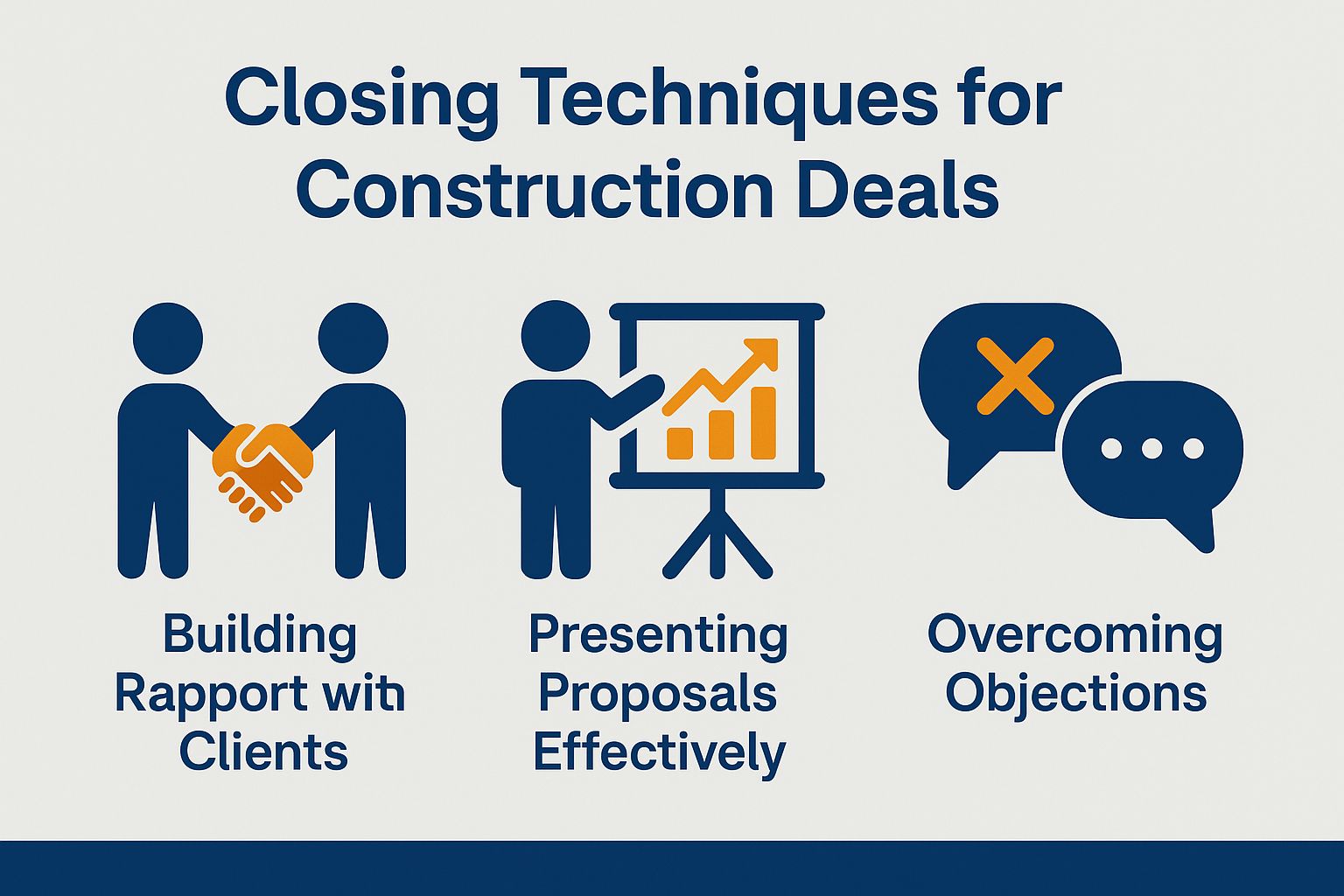
Building Rapport with Clients
Building rapport with clients can significantly impact trust levels, with 85% of clients preferring to work with those they feel connected to personally.
To create a strong bond, use clients’ names and refer to past conversations. This helps in building connections and encourages them to return.
Consider hosting client appreciation events, such as informal lunches or virtual coffee chats, to strengthen connections. A simple follow-up email after a meeting can reinforce your commitment to their needs.
Always be transparent about project progress and actively listen to feedback. By using these methods, you’ll build a closer connection, resulting in more loyalty and happiness.
Presenting Proposals Effectively with Sales Presentations
Presenting proposals effectively involves clear communication and persuasive techniques, with successful presentations including visual aids and client-focused benefits.
To structure your proposal, start with a concise executive summary that outlines the purpose and main benefits. Follow this with a problem statement, highlighting the client’s challenges.
Use tools like Canva or PowerPoint to create visually engaging slides, incorporating graphics and charts to illustrate data. Storytelling methods can improve interest; for example, showing how past customers gained can make your proposal easier to relate to.
Conclude with a strong call to action, emphasizing your value propositions, encouraging the client to move forward with your recommendations.
Overcoming Objections
Overcoming objections during contract negotiation can increase the likelihood of closing deals, with 70% of clients willing to proceed after hearing a well-prepared counterargument.
Effective strategies for managing objections involve active listening and empathy. For example, if a client is concerned about budget constraints, acknowledge their feelings, then provide a comparison of the long-term savings from your proposal versus the initial costs.
Another common objection is doubt about product effectiveness; respond by sharing case studies or testimonials that highlight successful outcomes.
By addressing objections with information and evidence, you create a helpful atmosphere that fosters confidence and aids in decision-making.
Tracking and Analyzing Results
Monitoring and assessing outcomes is important for improving lead generation methods, essential in inbound marketing and outbound marketing.
Half of the companies use CRM tools to assess lead performance well.

Using CRM Tools
Using CRM tools like Salesforce or Zoho can simplify lead management. 70% of users say these tools help them keep track and follow up better, which is important for lead tracking and prospecting.
The construction industry finds features such as tracking leads, automatic reporting, and combining project management tasks essential for construction marketing.
Choose a CRM that matches the size of your business-smaller businesses might find simpler systems like HubSpot useful, while bigger companies could need the more detailed customization options offered by Salesforce, important for customer segmentation and audience targeting.
Look for features like mobile access and document management, which can improve on-site coordination.
Assess your needs thoroughly; many CRMs offer free trials that allow you to evaluate their relevance to your workflows before committing, facilitating sales team training and strategic alliances.
Measuring ROI on Lead Generation
Checking the return on investment (ROI) for lead generation can show how well the budget is being spent. Companies often see an average ROI of 400% on campaigns that work well.
Key metrics for evaluating lead generation ROI include cost per lead (CPL) and conversion rates. To understand more about your data, use tools like Google Analytics. It helps you see your spending on each lead and find out how many leads become customers.
Combine findings from Google Analytics with CRM data to understand the lifetime value of customers acquired through these leads. For instance, if you spend $50 to acquire a lead and 10% of those leads turn into customers, analyzing your data can help you identify methods to improve results in upcoming campaigns.
About the Author
I’m James Holloway, a Texas A&M University graduate with a degree in Construction Engineering and the owner of a successful prefab office building company in Texas. For the past 12 years, I’ve helped businesses across the state create efficient, compliant, and cost-effective portable office solutions that work as hard as they do. As a contributor to US Construction Trailers, I focus on helping business owners make smart investments in modular space.